
Rail Transit Current Collection
Rail Transit Pantograph Carbon Strips
Carbon and metallized-carbon current collectors for overhead line, third-rail and special rail applications.
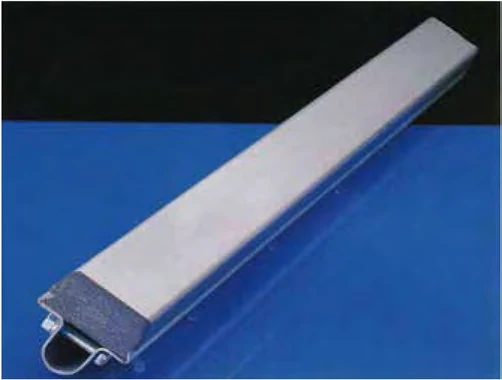
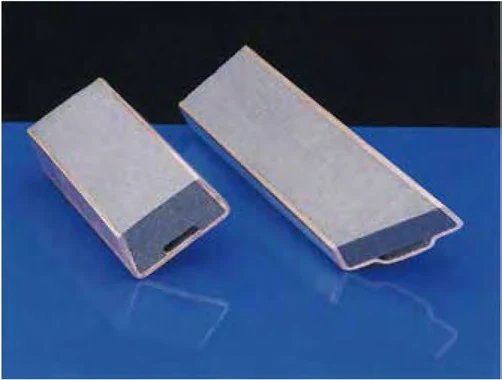
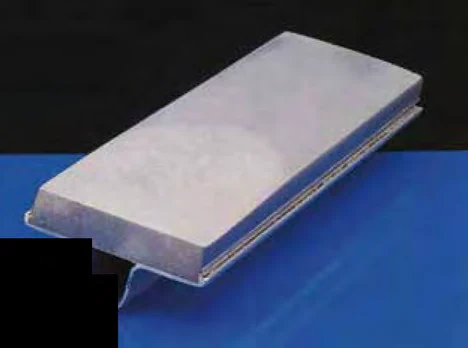
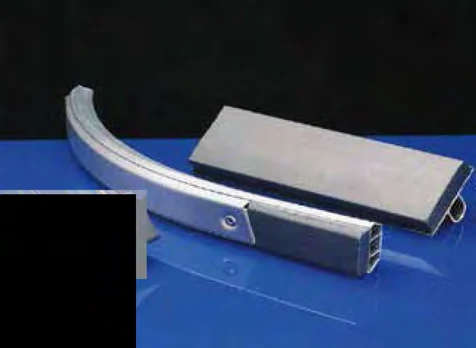
Product Overview
CONLUXS supplies carbon current collector assemblies and carbon profiles for pantographs. Options cover EMU, high-speed rail, locomotives, metro and light-rail projects, as well as third-rail and selected special-rail applications. Final grade, carrier and profile geometry are confirmed against the project data and approved drawing.
Available Collector Constructions
- Bonded: aluminium carrier and carbon profile joined with electrically conductive adhesive for low-weight, corrosion-resistant assemblies.
- Clamped: steel or copper carrier construction for conventional pantograph arrangements.
- Soldered: steel or copper carrier construction for higher mechanical load requirements.
- Composite: copper-shell construction for applications requiring high mechanical and electrical performance.
What Is It
Rail Transit Pantograph Carbon Strips — carbon and metallized-carbon current collectors for overhead line and third-rail applications.
Key Applications
EMU, high-speed rail, locomotives, metro and light-rail projects, as well as third-rail and selected special-rail applications.
Typical Assembly Performance
Values to Confirm During Technical Review
Typical values only. Confirm the selected grade, drawing and application conditions before order.
| Parameter | Typical value |
|---|---|
| Bond shear strength | > 5 N/mm² |
| Rated temperature resistance | 250°C |
| Short temperature exposure | 300°C for up to 1 minute |
| Short-circuit current load | Up to 30 kA |
| Carbon-to-carrier contact resistance | < 1.0 mOhm plain carbon; < 0.5 mOhm metallized carbon |
| Bonded construction bending load | Up to 3,500 N |
Representative Material Grades
Carbon and Metallized-Carbon Options
Material grading and actual geometry are selected against line voltage, current, speed, contact wire and pantograph data.
| Grade | Density g/cm³ | S.E.R. microOhm m | Flexural MPa | Metal | Current load A/mm² |
|---|---|---|---|---|---|
| ECH22 | 1.70 | 38 | 35 | 0% | 4-6 |
| ECHP72 | 1.73 | 34 | 37 | 0% | 6-8 |
| ECH68C | 2.50 | 4 | 65 | 40% | 12-16 |
| ECHP72C | 2.30 | 5 | 65 | 35% | 12-15 |
| ECHP72B | 2.40 | 8 | 65 | 40% | 16-20 |
| ECF80 | 8.00 | 0.2 | 11 | 0% | 25-30 |
What We Need for Selection
- Overhead line, third-rail or other collection method
- Line voltage, vehicle speed and current per pantograph
- Pantograph make, model and contact-wire details
- Existing profile width, thickness, length and radius
- Required carrier, joining method, arc protection or ADD requirement
Operation and Replacement
Store carbon strips dry and protected from shock. Use a torque-controlled wrench for installation. Plan replacement when residual carbon approaches 4-5 mm, measured from the upper edge to the aluminium carrier. Always follow the vehicle and pantograph manufacturer's maintenance procedures.
Frequently Asked Questions
What are Pantograph Carbon Strips?
Rail Transit Pantograph Carbon Strips are carbon and metallized-carbon current collectors for overhead line, third-rail, and special rail applications.
What vehicle types use these carbon strips?
These carbon strips cover EMU, high-speed rail, locomotives, metro, and light-rail projects, as well as third-rail and selected special-rail applications.
What construction methods are available?
Available construction methods include Bonded (aluminum carrier), Clamped (steel/copper carrier), Soldered, and Composite (copper-shell).
Send Your Drawing for a Technical Review
Share your pantograph model, current requirement and profile dimensions. CONLUXS will help match a suitable carbon strip configuration.