
UPS Feeder Panel & Cabinet for Data Center Power Distribution
Modular Server-Grade Rack-Mount Power Distribution for UPS Outputs
UPS Feeder Cabinet
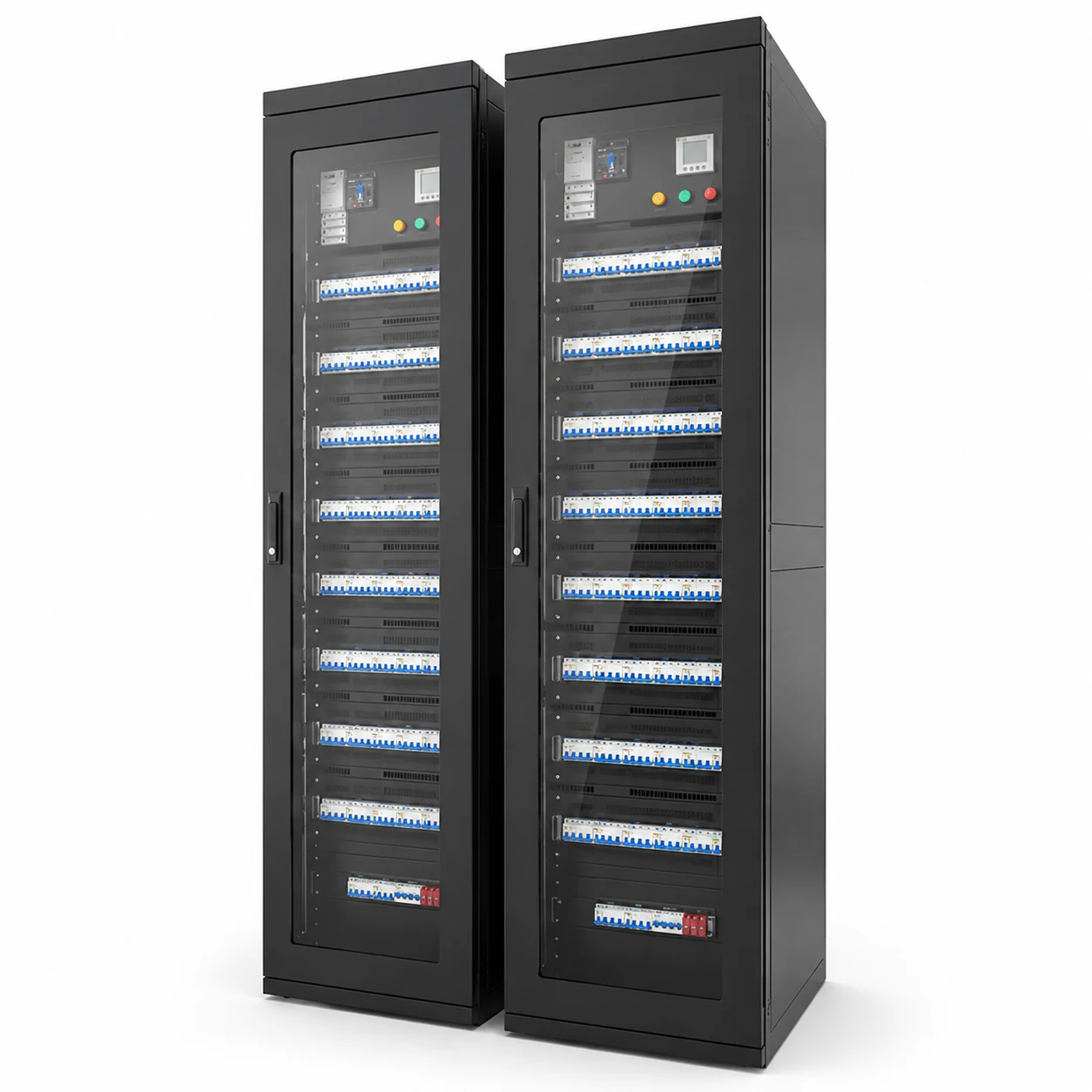
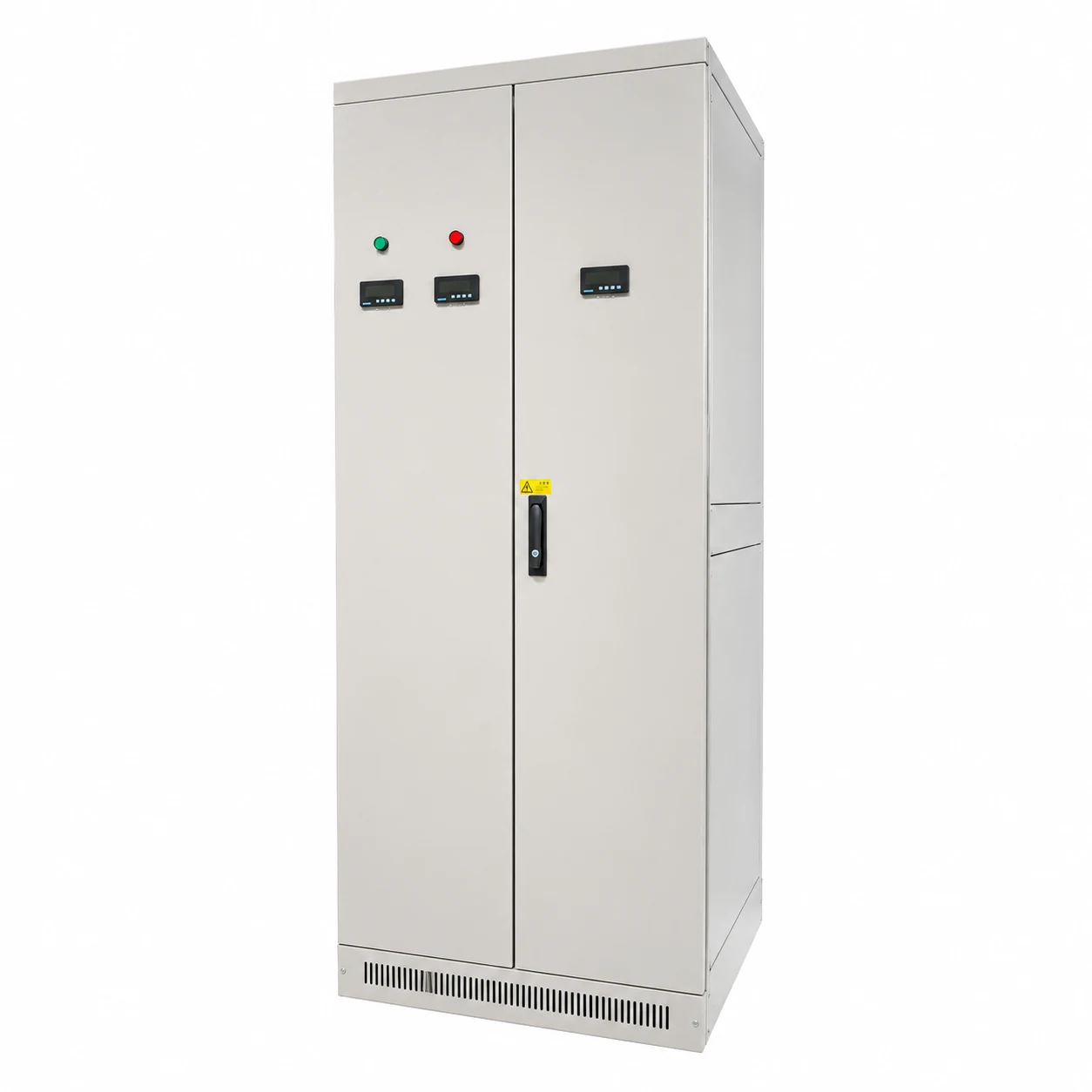
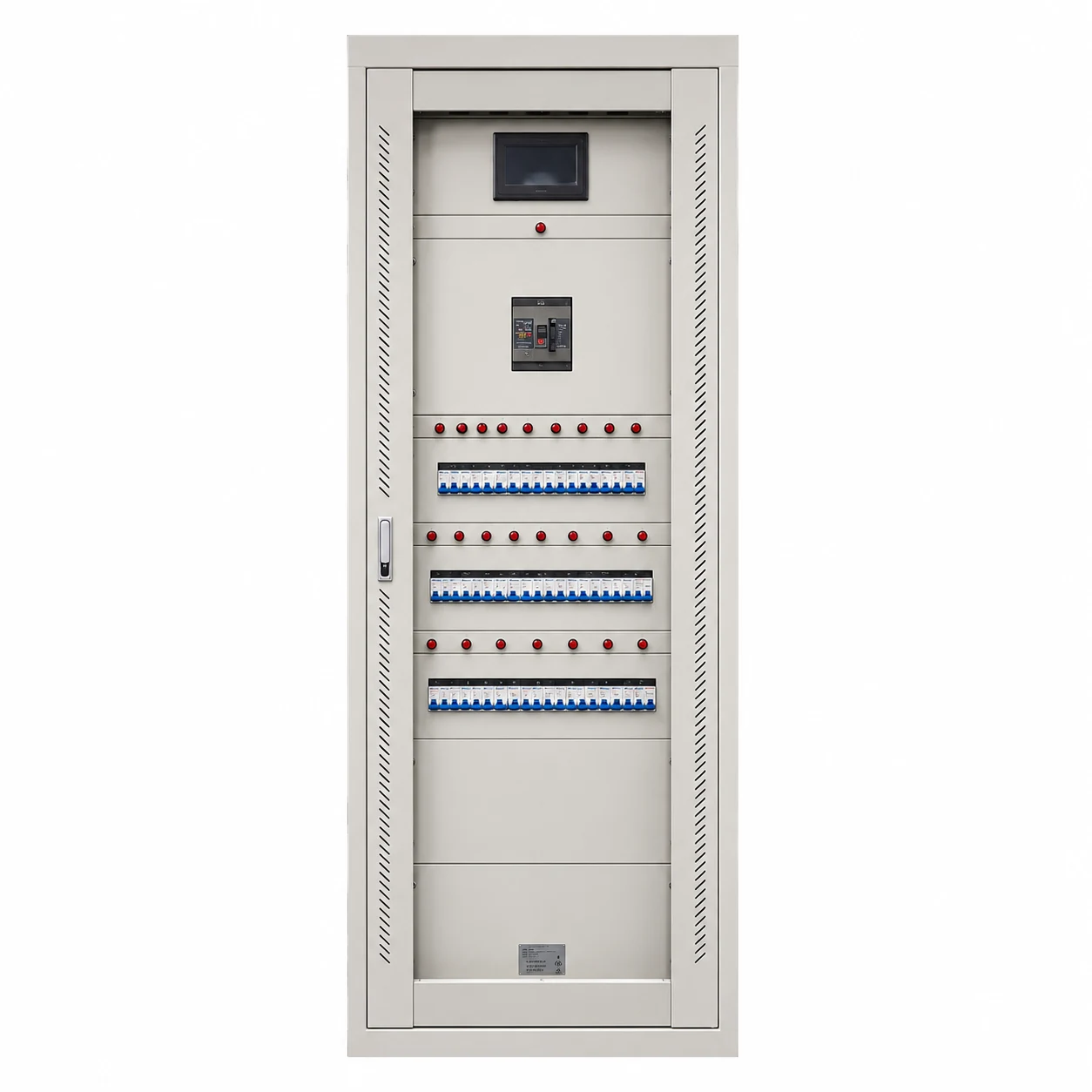
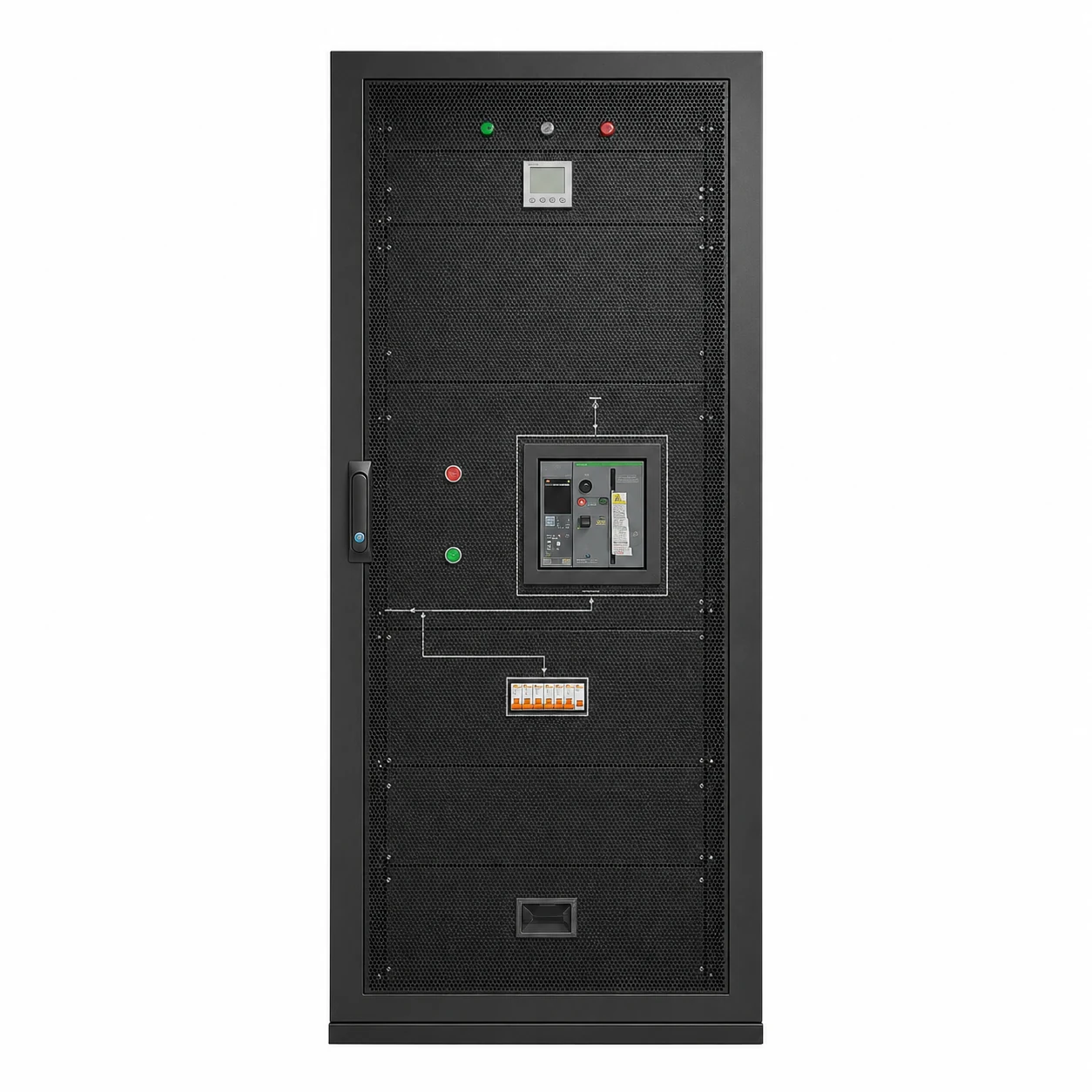
Conluxs UPS Feeder Cabinet · Server-Grade Rack · 8 Modules per Cabinet
Product Overview
The Conluxs UPS Feeder Panel & UPS Feeder Cabinet is a modular, server-grade rack-mount distribution unit designed for managing UPS output distribution in data center environments. It sits directly downstream of the UPS output, converting a single protected feeder into multiple independently protected branch circuits that are routed toward IT rooms, row-level loads and rack groups. Each cabinet accommodates up to 8 hot-swappable feeder modules, with module current ratings of 16A / 32A / 63A at AC 220V / 380V, enabling flexible circuit configurations and non-disruptive capacity expansion. The front-access design with intelligent per-branch metering simplifies daily operations, maintenance and load auditing across the critical power path.
Key Technical Features
- 8-Module Capacity: Each cabinet supports up to 8 hot-swappable feeder modules for flexible circuit distribution.
- Server-Grade Rack: Standard 19-inch rack-mount form factor with front-access design for easy integration.
- Per-Branch Metering: Individual current, voltage, and power monitoring per output branch with alarm thresholds.
- Hot-Swap Capability: Feeder modules can be added or replaced without de-energizing the entire cabinet.
- Protected Output Configurations: Outputs support C13 / C19 connectors and terminal block terminations for flexible rack and row connection.
What Is It
UPS Feeder Panel & Cabinet — modular server-grade rack-mount distribution unit designed for managing UPS output distribution in data center environments.
Key Applications
Managing UPS output feeders, distributing protected branch circuits to IT rows, and supporting non-disruptive capacity expansion in data centers.
Position in the Data Center Power Chain
In a typical data center power chain, utility power is first distributed through the facility's main low voltage switchgear, then flows through a UPS and through distribution assemblies before reaching the IT space. The UPS feeder panel is the first protected distribution layer after the UPS output: it conditions and distributes the UPS output toward IT rooms, rows and racks. From there, a data center precision distribution cabinet manages the final facility-side distribution downstream of the UPS, while rack-level power distribution units terminate the chain at the rack.
This layered approach means the UPS feeder panel carries a defined set of responsibilities: it terminates the UPS output, provides per-branch protection and metering, and establishes a controlled boundary where individual feeder circuits can be added, moved or extended without re-engineering the UPS output. Because each feeder module is hot-swappable and independently monitored, capacity changes at the row or rack level do not interrupt the rest of the critical power path.
UPS Feeder vs RPP vs Rack PDU
| Layer | Role | Typical Location |
|---|---|---|
| UPS Feeder Panel / Cabinet | Distributes protected UPS output into multiple feeder branches with per-branch metering | Downstream of UPS output |
| Precision Distribution Cabinet (RPP-style) | Manages final facility-side distribution and feeder layout for IT rooms | Facility / IT room distribution |
| Rack PDU | Last link in the chain; feeds servers and network equipment inside the rack | Within the server rack |
The UPS feeder panel is not a substitute for a rack PDU — it operates one layer upstream, distributing the UPS output toward rows and racks. A precision distribution cabinet (the RPP equivalent) then manages the room-level distribution, and the rack PDU terminates power at each rack. Projects should select each layer according to its rating, metering and protection requirements while keeping the full chain coordinated.
Technical Specifications
| Parameter | Specification |
|---|---|
| Form Factor | 19-inch Rack-Mount |
| Modules per Cabinet | 8 (Max) |
| Module Current Rating | 16A / 32A / 63A |
| Rated Voltage | AC 220V / 380V |
| Output Configurations | C13 / C19 / Terminal Block |
| Metering | Per-Branch V/A/kWh |
| Communication | RS485 / SNMP |
Frequently Asked Questions
What is the UPS Feeder Cabinet?
The UPS Feeder Cabinet is a modular, server-grade rack-mount distribution unit designed for managing UPS output feeders in data center environments.
How many modules does the UPS Feeder Cabinet support?
Each cabinet supports up to 8 hot-swappable feeder modules for flexible circuit distribution.
What is the UPS Feeder Cabinet used for?
The UPS Feeder Cabinet is used for managing UPS output distribution, enabling flexible circuit configurations and non-disruptive capacity expansion.
How do I choose between a UPS feeder panel, an RPP and a rack PDU?
Select by layer and duty: the UPS feeder panel distributes protected UPS output to rows and racks, an RPP-style precision distribution cabinet manages room-level distribution, and the rack PDU terminates power inside each rack. Coordinate ratings, metering and protection across the full chain.
Can the UPS Feeder Cabinet be expanded after installation?
Yes. The cabinet supports up to 8 hot-swappable feeder modules with ratings of 16A / 32A / 63A, so branch circuits can be added or changed without de-energizing the entire cabinet.
Related Solutions
- Data center precision distribution cabinetsfacility-side precision distribution downstream of the UPS
- Rack PDU for data center racksrack-level power distribution as the last link in the chain
- Busway vs cable for high-density data centersoverhead distribution guidance between the feeder layer and the rack
- RPP cabinet solutionsremote power panel style distribution for project-specific layouts
- UPS feeder distribution cabinet solutionsUPS Feeder Distribution Cabinets
- UPS input distribution cabinet applicationsUPS Input Distribution Cabinets
Ready to Deploy UPS Feeder Cabinets?
Download the complete technical datasheet or request the full product catalog. Our team will follow up within 48 hours.